Everest Base Camp Trek 2026: Cost, Difficulty, and Itineraries
31st May, 2026 - Posted By: Himalayan AbodeThe Everest Base Camp trek 2026 is one of the most famous treks in the world. Each year, thousands of trekkers walk this route to the foot of Mount Everest. This trek is moderate in difficulty, not a technical climb. You only need good basic fitness and a clear plan. In 2026, the Everest Base Camp trek 2026 cost is still very reasonable compared to many other high‑altitude adventures.
This guide explains the Everest Base Camp trek 2026 cost, difficulty, and full itinerary based on your official Himalayan Abode 15‑day program. You will see daily activities, costs, and what to expect as a beginner or experienced trekker.
Everest Base Camp trek 2026 cost: what you need to know
The Everest Base Camp trek 2026 cost depends on your group size, season, and package level. Most standard guided treks in 2026 cost between $1,100–$1,700 per person. This is a realistic range for a quality package with a government‑registered guide, porter, meals, and teahouse stays.
A typical standard package includes:
- Airport transfers in Kathmandu
- Hotel in Kathmandu with breakfast
- Kathmandu–Lukla round‑trip flights
- All permits (Sagarmatha National Park and TIMS)
- English‑speaking government‑registered guide and local porters (about 2 trekkers : 1 porter)
- Guide and porter salaries, insurance, food, and accommodation
- Breakfast, lunch, and dinner with tea or coffee on the trek
- All teahouse accommodation on the trail
- Down jacket, trekking poles, and duffel bag (often included)
Extra costs you must pay yourself:
- Mineral water, boiled water, and device charging
- Hot shower and Wi‑Fi on the trek
- Personal expenses and tips
- Travel and evacuation insurance
For Indian citizens, the Everest Base Camp trek 2026 cost is often lower because permit fees are cheaper and no visa is needed. Budget around ₹1,20,000–₹2,00,000 per person for a standard guided trek, depending on group size and season.
How difficult is the Everest Base Camp trek ?
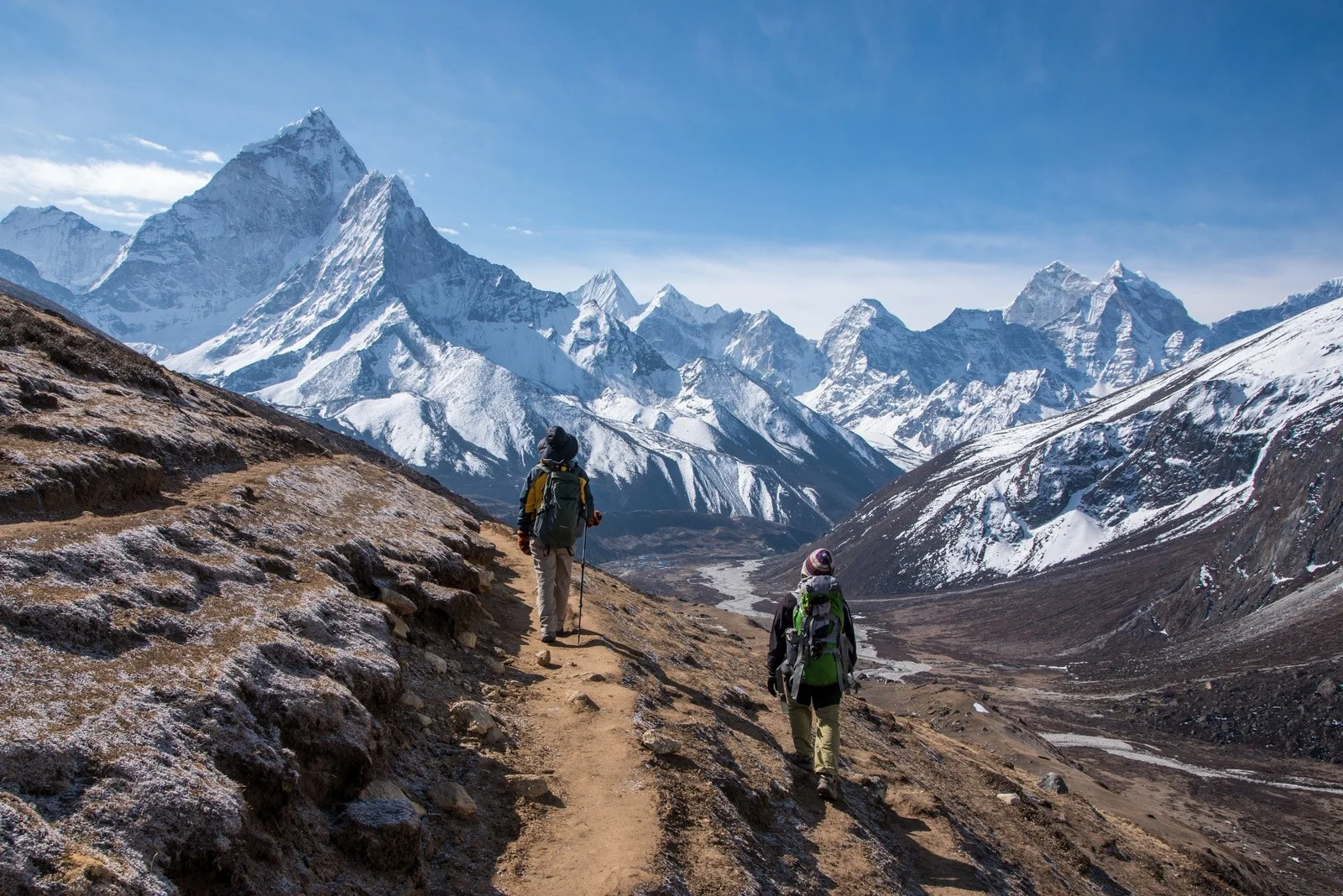
The Everest Base Camp trek 2026 is moderate to challenging for healthy trekkers. It is not a technical climb, but you must walk 5–7 hours per day and reach high altitude.
Key difficulty points:
- Maximum altitude: 5,545 m at Kala Patthar (best sunrise view of Everest)
- Everest Base Camp itself is at 5,364 m
- You walk through forests, rivers, villages, and rocky high‑altitude areas
- You must handle cold weather, thin air, and long walking days
The trek is suitable for:
- Healthy adults with good fitness
- First‑time trekkers with 4–6 weeks of training
- People who follow altitude rules and walk slowly
To prepare:
- Walk 10–15 km per day with light shoes
- Carry a small backpack (5–8 kg)
- Train for 4–6 weeks before the trek
- Avoid heavy smoking and late nights before departure
Everest Base Camp trek 2026 itinerary
Himalayan Abode Everest Base Camp Trek is a 15‑day program with clear acclimatization and rest days. Here is the full 15‑day itinerary:
Day 1 – Arrival in Kathmandu (1,350 m)
You arrive at Kathmandu airport and are picked up and transferred to your hotel. After a short rest, you can walk around your hotel area. You stay overnight in Kathmandu.
Day 2 – Kathmandu sightseeing (UNESCO sites)
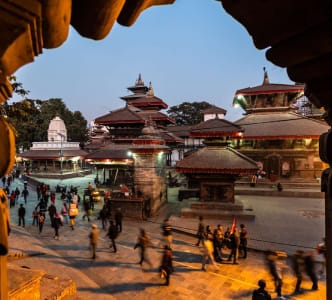
After breakfast, you visit cultural heritage sites like Bhaktapur, Pashupatinath, and Boudhanath. You drive back to your hotel and stay overnight.
Day 3 – Kathmandu to Phakding (2,640 m)
After breakfast, you drive to the airport for your Lukla flight (about 30 minutes). After landing, you begin your trek to Phakding (about 4 hours). You stay overnight in Phakding.
Day 4 – Phakding to Namche Bazaar (3,435 m)
The trail shows beautiful waterfalls and views of Thamserku. You cross suspension bridges and may spot Mt. Everest if the weather is clear. You walk about 7 hours to Namche Bazaar and stay overnight.
Day 5 – Acclimatization in Namche Bazaar
You spend the day in Namche Bazaar to adjust to altitude. You can hike to Khumjung–Khunde or visit the Sherpa Museum. Light walking helps adapt your body. You stay overnight in Namche.
Day 6 – Namche Bazaar to Tengboche (3,863 m)
The trail descends to the Dudh Kosi River with views of Everest, Lhotse, Ama Dablam, and Khangtega. You pass Phunki Thanga and climb through rhododendron forest to Tengboche. You see the famous Tengboche Monastery and stay overnight.
Day 7 – Tengboche to Dingboche (4,412 m)
You walk down through rhododendron forest and cross the Imja Khola. Then moving through Lower Pangboche and enjoy views of Ama Dablam. You reach Dingboche and stay overnight.
Day 8 – Acclimatization in Dingboche
Dingboche is one of the best places to stay on the way to EBC at about 4,300 m. You spend 2 nights here for acclimatization. You hike to Pokalde Peak (around 5,000 m) and return to the hotel. This helps avoid altitude sickness. You stay overnight in Dingboche.
Day 9 – Dingboche to Lobuche (4,931 m)
The route climbs up behind Pheriche and continues to Lobuche. You see excellent views of Tawoche and Cholatse. You stay overnight in Lobuche.
Day 10 – Lobuche to Gorakshep (5,140 m), hike to Everest Base Camp (5,364 m)
The path is flat at first, then goes through rocky hills. You reach Gorakshep (about 4 hours). After lunch, you hike to Everest Base Camp (about 3 hours). You walk near the Khumbu Glacier and see the Khumbu Icefall. You stay overnight in Gorakshep.
Day 11 – Gorakshep to Pheriche (4,240 m)
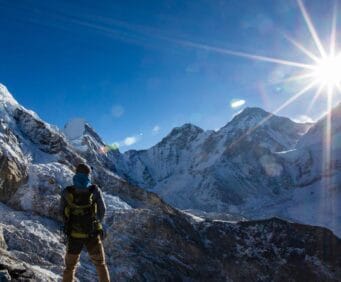
You wake up early and climb Kala Patthar (5,545 m) for sunrise (about 3 hours). You see the best up‑close view of Everest, Lhotse, and Nuptse. After breakfast, you walk down to Pheriche (about 4 hours). You stay overnight in Pheriche.
Day 12 – Pheriche to Namche Bazaar
The trail descends to Pangboche with views of Ama Dablam and Lhotse. You cross the Imja stream and pass through dense pine forest. You arrive at Namche Bazaar and stay overnight.
Day 13 – Namche Bazaar to Lukla (2,850 m)
You descend to the Dudh Kosi River and cross several suspension bridges. Following the same route back to Lukla (about 7 hours). You stay overnight in Lukla.
Day 14 – Lukla to Kathmandu
After breakfast, you fly back to Kathmandu with views of Kongde Himal, Everest, Khumbu, and Langtang ranges. You transfer to your hotel and stay overnight.
Day 15 – Fly back home
You are picked up from your hotel and transferred to the airport for your final departure.
This 15‑day Everest Base Camp trek 2026 includes 2 full acclimatization days (Namche and Dingboche) and Kala Patthar sunrise, which is the main viewpoint for Everest.
Best time for Everest Base Camp
The best time for Everest Base Camp trek 2026 is spring (March–May) and autumn (September–November). These months have clear skies and stable weather.
- In spring, the sky is clear and rhododendrons bloom. Temperatures are ideal for trekking.
- In autumn, the weather is stable and mountain views are crisp. This is the peak trekking season.
Avoid monsoon (June–August) due to heavy rain and winter (December–February) for extreme cold and snow, unless you are experienced.
Frequently Asked Questions (FAQ)
1. What is the cost?
A standard guided Everest Base Camp trek 2026 costs about $1,100–$1,700 per person. Indian citizens may pay around ₹1,20,000–₹2,00,000, depending on group size and season.
2. What is the highest point on the Everest Base Camp trek?
The highest point is Kala Patthar at 5,545 m, which gives the best close‑up view of Everest. Everest Base Camp itself is at 5,364 m.
3. How difficult is the trek?
The trek is moderate to challenging. You walk 5–7 hours per day and reach high altitude. Acclimatization days reduce the risk of altitude sickness.
4. Do I need travel insurance for Everest Base Camp trek?
Yes. Comprehensive travel insurance covering high‑altitude trekking and emergency evacuation is mandatory.
5. Is Wi‑Fi available on Everest Base Camp trek?
Wi‑Fi is available at some tea houses for an extra charge, but connectivity is limited.
6. What are the main mountains you see on this trek?
You see Everest, Lhotse, Nuptse, Ama Dablam, Pumori, Thamserku, and more.
7. Who are the main indigenous people in this region?
Sherpas are the dominant group. In lower parts of the Khumbu Valley, you can also find Rai people.
8. What is the main vegetation in this area?
The main vegetation is rhododendron and pine.
9. What animals can you see in this region?
You can see Himalayan Thar, deer, leopard, wild boar, and many species of Himalayan birds.
10. How do I book Everest Base Camp trek with Himalayan Abode?
Send your dates, group size, and route to Himalayan Abode. You receive a clear Everest Base Camp trek itinerary and price. After paying a deposit, they confirm flights, permits, and hotel bookings.
Recent Posts