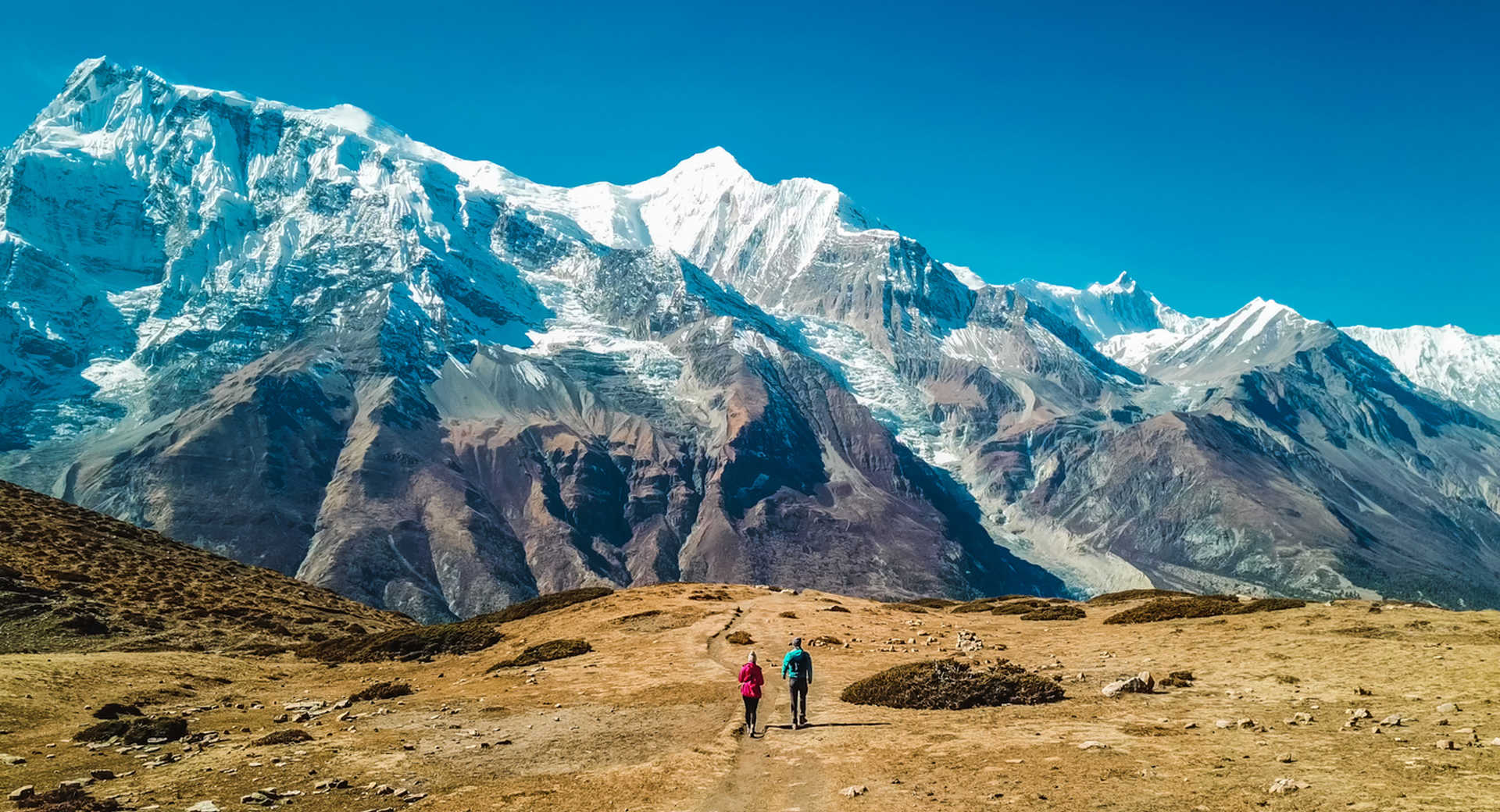
Annapurna Circuit Trek 2026: Difficulty and Safety Guide
14th June, 2026 - Posted By: Himalayan AbodeThe Annapurna Circuit trek 2026 is one of Nepal’s most iconic long treks. It circles the Annapurna massif and ends at the sacred Muktinath Temple. You cross Thorong La Pass at 5,416 m, the highest point on the trek.
The trek is rated moderate to challenging. You do not need technical climbing skills, but you must walk 5–7 hours per day and handle high altitude. With proper training, acclimatization, and a good guide, most healthy trekkers complete the Annapurna Circuit trek 2026 safely.
How difficult is the Annapurna Circuit trek?
The Annapurna Circuit trek 2026 is moderate to challenging. You walk 11 trekking days and cross Thorong La Pass at 5,416 m. This pass is the hardest and most dangerous part of the trek.
Key difficulty points:
- Daily walking: 5–7 hours per day on most sections, up to 8–10 hours on Thorong La Pass day
- Maximum altitude: 5,416 m at Thorong La Pass
- Terrain: Stone steps, forest paths, suspension bridges, high desert, and rocky alpine trails
- No technical climbing required, but good fitness and mental resilience are needed
Compared with Annapurna Base Camp:
| Feature | Annapurna Circuit | Annapurna Base Camp |
|---|---|---|
| Maximum Altitude | 5,416 m | 4,130 m |
| Duration | 11–12 days | 12–13 days |
| Difficulty | Moderate–Challenging | Moderate |
| Pass Crossing | Thorong La (5,416 m) | None |
| Flight to Exit | Yes (Jomsom–Pokhara) | No (drive) |
The Annapurna Circuit trek 2026 is more demanding because of the high pass and long ascent/descent, but it is shorter than the classic 11‑day circuit.
Annapurna Circuit trek 2026 itinerary
Himalayan Abode Annapurna Circuit package is an 11‑day trekking program with a clear route and one acclimatization day in Manang. This matches your product page and builds a safe, realistic path for 2026.
Here is the full 11‑day itinerary (plus Day 12 departure):
Day 01 – Kathmandu to Besishahar (Drive, approx. 8 hrs)
You drive from Kathmandu to Besishahar (about 8 hours). You stay overnight in Besishahar. This is the main starting point for the trail.
Day 02 – Besishahar to Chame (2,670 m) by jeep, trek begins
Tomorrow you drive by jeep to Chame (about 9 hours). The trail truly begins here. You stay overnight in Chame, a small village with guesthouses.
Day 03 – Chame to Pisang (3,200 m)
The trail goes through deep forest in a steep and narrow valley, crossing a river on a long bridge at 3,040 m. You get fantastic views of Pisang Peak and Annapurna ranges. It takes about 6 hours. You stay overnight in a tea house in Pisang.
Day 04 – Pisang to Manang (3,540 m)
The trail leads up a steep ridge that extends into the valley. You see excellent views of Manang Valley with Tilicho Peak (7,132 m). Cross the Marshyangdi on a large wooden bridge near Mungji at 3,360 m, traverse to Braka (a Tibetan‑style village with about 200 houses), and finally arrive at Manang. You stay overnight in Manang.
Day 05 – Acclimatization day in Manang
You spend the day in Manang village to acclimatize and explore the area. See excellent views of Annapurna II, Annapurna III, and Gangapurna Lake. You stay overnight at a lodge in Manang. This non‑negotiable day helps avoid altitude sickness.
Day 06 – Manang to Yak Kharka (4,350 m)
The trail ascends gently all the way to Yak Kharka, passing through Gunsang (3,960 m) village (about 3½ hours). En route, you get panoramic views all day. You stay overnight at a lodge in Yak Kharka.
Day 07 – Yak Kharka to Thorong Phedi (4,420 m)
You continue trekking to Thorong Phedi (4,420 m), taking about 3½ hours. Leaving Yak Kharka, you gradually climb to a ridge before descending to the headwaters of the Marshyangdi and crossing via a covered wooden bridge. After a short ascent up the mountain path on the right bank, you follow a narrow trail across an unstable spree slope and then descend to Thorong Phedi. You stay overnight at a lodge.
Day 08 – Thorong Phedi to Muktinath (3,750 m) via Thorong La Pass (5,416 m)
This is the most difficult day. You start very early. The trail climbs from Phedi to High Camp and continues to the Pass with excellent views of snow‑capped mountains. You reach the top and, once you cross Thorong La (5,416 m), the way continually descends to Muktinath. See dramatic scenery of the Mustang Valley along with Mt. Dhaulagiri (8,167 m). You stay overnight in Muktinath.
Day 09 – Muktinath to Jomsom (2,743 m)
You walk down to Eklebhatti and continue trek to Jomsom (about 6 hours). You end your walk here and stay overnight in a tea house in Jomsom.
Day 10 – Jomsom to Pokhara (822 m) by flight
After breakfast, you check in to the airport and fly to Pokhara (about 20 minutes). You get extraordinary views of Mt. Dhaulagiri, Mt. Nilgiri, and many more peaks. You stay overnight at a hotel in Pokhara.
Day 11 – Pokhara to Kathmandu (Drive)
After breakfast, you go to the bus station and drive to Kathmandu (about 7–8 hours). Once you arrive, you check in to your hotel. In the evening, you enjoy a Nepalese farewell dinner with a typical cultural programme. You stay overnight in Kathmandu.
Day 12 – Hotel to Airport (Departure)
You are picked up from your hotel very early and driven to the airport for your departure. Your journey in Nepal ends.
This 11‑day Annapurna Circuit trek 2026 includes 1 full acclimatization day in Manang, a steady altitude profile, and a scenic flight from Jomsom to Pokhara, which reduces long descent fatigue.
Thorong La Pass crossing: the hardest part of Annapurna Circuit trek 2026
The Thorong La Pass crossing is the most difficult day of the Annapurna Circuit trek 2026. You climb from 4,420 m (Thorong Phedi) to 5,416 m (Pass) and then descend to 3,750 m (Muktinath).
Key points:
- Duration: 8–10 hours total (up and down)
- Altitude: 5,416 m at the top
- Weather: Can be windy, cold, and foggy
- Risk: Altitude sickness and bad weather can make the day dangerous
To stay safe:
- Start early (around 4–5 a.m.)
- Walk slowly and take breaks
- Drink water all day
- Use a guide who knows the pass conditions
- If you feel sick, do not push to the top
Best time for Annapurna Circuit trek 2026
The best time for Annapurna Circuit trek is spring (March–May) and autumn (September to mid‑December). These months have clear skies and stable weather.
- In autumn, the weather is stable and mountain views are crisp. This is the peak trekking season.
- In spring, the sky is clear and rhododendrons bloom. Temperatures are ideal for trekking.
Avoid monsoon (June–August) due to heavy rain, muddy trails, and leeches. Avoid January and deep winter if you are a beginner, because the trail may be covered with snow and it may be difficult to find the path.
Cost of Annapurna Circuit trek 2026
A standard guided Annapurna Circuit trek 2026 costs about $1,100–$1,700 per person for an 11–12‑day program. This includes guide, porter, meals, teahouse stays, and permits.
Indian citizens may pay around ₹1,20,000–₹1,90,000, depending on group size and season. Permits are cheaper for Indian passport holders, and no visa is needed.
Extra costs you must pay yourself:
- Kathmandu city tour entrance fees
- Lunch and dinner in Kathmandu
- Mineral water, boiled water, and device charging
- Hot shower and Wi‑Fi on the trek
- Personal expenses and tips
- Travel and evacuation insurance
Permits and documents for Annapurna Circuit trek 2026
You need permits for the Annapurna Circuit trek 2026. Your trekking agency includes these in the package.
You usually need:
- Annapurna Conservation Area Permit (ACAP)
- TIMS card (Trekkers’ Information Management System)
You submit your passport, photos, and details. The agency buys the permits and gives you printed copies. You must show them at checkpoints on the trail. Keep your passport, permit, and insurance in your daypack.
Frequently Asked Questions (FAQ)
1. How difficult is the Annapurna Circuit trek?
The Annapurna Circuit trek 2026 is moderate to challenging. You walk 5–7 hours per day and cross Thorong La Pass at 5,416 m. No technical climbing skill is required, but prior hiking experience at altitude is recommended.
2. What is the highest point on Annapurna Circuit trek?
The highest point is Thorong La Pass at 5,416 m. This pass crossing is the most difficult day of the trek.
3. How many days does Annapurna Circuit trek take?
Your Himalayan Abode package is an 11‑day trekking program plus 1 departure day (Day 12). Most programs last 11–12 days.
4. Do I need a guide for Annapurna Circuit trek in 2026?
You can walk alone, but using a certified guide is safer. A guide knows the route, Thorong La conditions, and local culture. The package includes a licensed guide and porters.
5. What permits do I need for Annapurna Circuit trek in 2026?
You need an Annapurna Conservation Area Permit (ACAP) and a TIMS card. Your trekking agency includes these in the package.
6. When is the best time for Annapurna Circuit trek?
The best time is autumn from September to mid‑December and spring from February to May. These months have clear skies and safer weather.
7. What should I pack for Annapurna Circuit trek?
Pack layered clothing, waterproof jacket and pants, quality trekking boots, wool socks, sun protection (hat, sunglasses, sunscreen), trekking poles, headlamp, sleeping bag rated to –15°C (available for rent), personal first aid kit, water purification tablets, and a lightweight backpack.
8. How do I book Annapurna Circuit trek in 2026 with Himalayan Abode?
Send your dates, group size, and route to Himalayan Abode. You receive a clear Annapurna Circuit trek 2026 itinerary and price. After paying a deposit, they confirm transport, permits, and lodge bookings.
9. What mountains can I see on Annapurna Circuit trek?
You can see Annapurna I (8,091 m), Annapurna II (7,937 m), Annapurna III (7,555 m), Annapurna IV (7,525 m), Dhaulagiri (8,167 m), Manaslu (8,163 m), Nilgiri (7,061 m), and Tukuche Peak (6,920 m) on the trek.
10. Is Thorong La Pass crossing dangerous?
Yes, it can be dangerous if weather is bad or you rise too fast. Start early, walk slowly, and listen to your guide. If you feel sick, do not push to the top.