Everest Base Camp Trek in December: Winter Guide
8th November, 2026 - Posted By: Himalayan AbodeThe Everest Base Camp trek in December is possible, and it rewards prepared trekkers. Trails stay open, skies turn crisp, and crowds disappear. However, the cold becomes serious above Dingboche.
December marks the start of winter in the Khumbu region. Dry air brings sharp mountain views and almost no rain. Nights at Gorakshep and Base Camp can fall between −15°C and −25°C.
This guide covers EBC December weather and temperature, lodge availability, costs, safety, and the EBC vs January comparison. It also follows Himalayan Abode’s Everest Base Camp package route.
Is EBC open in winter?
Yes. Is EBC open in winter? The answer is yes. The trail does not close when winter begins.
Trekkers walk to Base Camp in December, January, and February. Lukla flights continue on clear mornings. The main villages keep lodges running.
What changes is the cold, daylight, and lodge availability. Days become shorter, ice forms above Dingboche, and some high lodges shut for the season. High passes such as Cho La and Kongma La often block with snow.
So the route stays open, but it thins. Expect fewer trekkers, fewer menu options, and frozen water pipes.
EBC December weather and temperature
The EBC December weather and temperature picture is simple: dry, clear, and very cold.
December is the gentlest winter month on the route. Average daytime highs sit around 5°C to 10°C below Namche. Lukla daytime temperatures reach about 12°C.
Conditions change fast with altitude. Here is a general guide:
| Location | Daytime | Nighttime |
|---|---|---|
| Lukla (2,860 m) | 5°C to 12°C | −5°C to −8°C |
| Phakding (2,610 m) | 6°C to 13°C | −4°C to −7°C |
| Namche (3,440 m) | Around 1°C to 9°C | −8°C to −12°C |
| Dingboche (4,410 m) | Above freezing in sun | −10°C to −16°C |
| Gorakshep (5,164 m) | −3°C to 0°C | −15°C to −25°C |
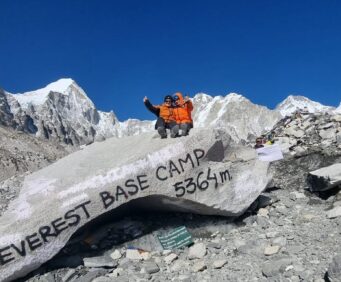
| Base Camp (5,364 m) | −5°C to 0°C | −20°C to −25°C |
Wind chill on exposed ground can make conditions feel below −30°C. Sunshine warms you quickly, but shade feels sharp.
Rain is almost absent. Lukla records about 0.5 mm of precipitation in December. That dryness creates the clearest views of the year.
Teahouses open in winter
The question of teahouses open in winter needs a careful answer. Most lodges stay open, but not all of them.
Below Dingboche, lodges run close to normal. Lukla, Phakding, Namche, Tengboche, and Pheriche keep reliable service. Dingboche’s larger lodges often operate all year.
Above Dingboche, the picture changes. Lobuche and Gorakshep usually keep only one or two lodges running. Menus shorten, hot showers stop when pipes freeze, and water often arrives in buckets.
Late December is riskier than early December. Some lodge families close and descend to lower villages after mid‑month. Off‑route lodges at Thagnak, Dzongla, and Chhukung may shut completely.
Book through an operator who confirms rooms in advance. A guide who knows current lodge status is valuable in winter.
Packing for December
Winter gear matters more than price on a December trek. Sleeping bags rated to −20°C or lower are sensible for Base Camp altitude.
Pack these items:
- Down jacket rated for deep cold.
- Insulated down pants for high sections.
- Multiple thermal base layers.
- Thick insulated gloves and mittens.
- Balaclava or buff.
- Wool socks and liner socks.
- Waterproof boots with good tread.
- Microspikes for icy sections.
- Warm sleeping bag and liner.
- Hand warmers and insulated bottle.
- Headlamp and spare batteries.
- Sunglasses and high‑SPF sunscreen.
Do not rely on lodge blankets. Rooms have no central heating and single‑pane windows. Once the stove dies, indoor temperatures drop below freezing above 3,200 meters.
EBC December cost
The EBC December cost is usually lower than autumn pricing, though some operators keep rates similar.
A guided December trek often costs between $1,250 and $1,800 per person. Budget packages start near $1,050, while premium options reach $2,000–$2,800.
Himalayan Abode’s standard Everest Base Camp package includes airport transfers, Kathmandu hotel, Lukla flights, Sagarmatha National Park permits, guide and porter, teahouse stays, and meals on the trek.
Extra costs to plan for:
- Winter gear purchase or rental.
- Extra hotel nights for flight delays.
- Hot showers and charging fees.
- Snacks and drinks.
- Travel insurance with helicopter evacuation.
- Tips for guides and porters.
December travel insurance becomes more important. Snow can delay Lukla flights, and helicopter rescue may cost thousands of dollars without coverage.
EBC vs January
The EBC vs January comparison matters for travelers choosing a winter month. December is the friendlier choice.
December retains better lodge availability because autumn infrastructure lingers into early weeks. January sits at the coldest point. Nights drop to −18°C or lower, and more lodges close.
January also has slightly more snow risk. Lukla recorded about 15.3 mm of precipitation in January, compared with 0.5 mm in December.
December offers one advantage in the second half: Christmas and New Year trekkers create a small bump of activity. That can mean slightly better services near the holidays.
If you want the best winter window, choose the first half of December. The second option is the last ten days of February, when conditions improve.
December itinerary with Himalayan Abode
This itinerary follows Himalayan Abode’s Everest Base Camp route. Winter travel may require adjustments for snow and flight delays.
Day 1 – Arrival in Kathmandu (1,350 m)
You arrive and transfer to your hotel. You must collect permits and check winter gear.
Day 2 – Kathmandu sightseeing
You visit Bhaktapur, Pashupatinath, and Boudhanath. Your guide briefs you on winter conditions.
Day 3 – Fly to Lukla and trek to Phakding (2,610 m)
You take the morning flight, then walk a short first day. You stay overnight in a teahouse.
Day 4 – Phakding to Namche Bazaar (3,440 m)
You climb through forests and cross suspension bridges. You stay overnight in Namche.
Day 5 – Acclimatization in Namche
You rest or hike to Khumjung. You avoid pushing higher while your body adjusts.
Day 6 – Namche to Tengboche (3,860 m)
You walk through rhododendron forest with Everest and Ama Dablam views. You visit the monastery.
Day 7 – Tengboche to Dingboche (4,410 m)
You climb above the tree line. Ice may appear on shaded sections.
Day 8 – Acclimatization in Dingboche
You rest or hike briefly. Your guide monitors your health closely.
Day 9 – Dingboche to Lobuche (4,940 m)
You walk a shorter day. Lodge choice narrows at this elevation.
Day 10 – Lobuche to Gorakshep and Everest Base Camp (5,364 m)
You reach Gorakshep, then walk to Base Camp. You stay in a basic lodge at Gorakshep.
Day 11 – Kala Patthar (5,545 m) and descend to Pheriche
You climb for sunrise if conditions allow, then descend for warmth.
Day 12 – Pheriche to Namche Bazaar
You descend through Pangboche and Tengboche. Temperatures feel milder.
Day 13 – Namche to Lukla
You walk back to Lukla and stay overnight.
Day 14 – Fly to Kathmandu
You return to the city. Keep a buffer day for weather delays.
Day 15 – Departure
You transfer to the airport for your flight home.
Safety in December
Winter trekking asks more of your body. Cold reduces dexterity, drains energy, and worsens altitude symptoms.
Follow these rules:
- Walk slowly and start early.
- Use microspikes on icy sections.
- Keep hands and face covered in wind.
- Drink water before it freezes.
- Eat hot meals whenever possible.
- Watch for numbness, shivering, and confusion.
- Report headaches or dizziness to your guide.
- Turn back if snow blocks the trail.
- Carry insurance covering high‑altitude evacuation.
Some trekkers stop at Dingboche and return when heavy snow arrives. That decision is wise, not weak.
Frequently Asked Questions
1. Is the Everest Base Camp trek in December possible?
Yes. The trail stays open, most lodges operate, and guided treks run through December. Cold and limited high lodges are the main challenges.
2. What is EBC December weather and temperature like?
December brings dry air, clear skies, and little rain. Days feel mild at lower villages, while nights above Dingboche drop to −15°C or colder.
3. Is EBC open in winter?
Yes. Trekkers walk the route through December, January, and February. High passes close, but the main trail to Base Camp remains accessible.
4. Are teahouses open in winter on the EBC trail?
Most lodges below Dingboche stay open. Lobuche and Gorakshep usually keep one or two lodges running with limited menus.
5. What is the EBC December cost?
A guided December trek typically costs $1,250–$1,800 per person. Premium packages can reach $2,000–$2,800.
6. Is December better than January for EBC?
December is generally better. Lodges remain more available, temperatures are slightly less harsh, and snow risk is lower.
7. How cold is Everest Base Camp in December?
Daytime temperatures sit between −5°C and 0°C. Nights range from −20°C to −25°C, with wind chill making it feel colder.
8. Do I need special gear for a December EBC trek?
Yes. You need a down jacket, insulated pants, thick gloves, thermal layers, microspikes, and a sleeping bag rated well below freezing.
9. Can beginners trek EBC in December?
Beginners can manage the route with strong fitness, proper gear, and an experienced guide. Cold tolerance and winter experience help greatly.
10. Will Lukla flights run in December?
Flights usually operate on clear mornings. Snow, fog, or wind can cause delays, so keep buffer days in your plan.
The Everest Base Camp trek in December offers the clearest skies and quietest trails of the year. Prepare for deep cold, confirm lodge bookings, and travel with a reliable guide. Early December gives you the best balance of comfort, access, and views.
Recent Posts