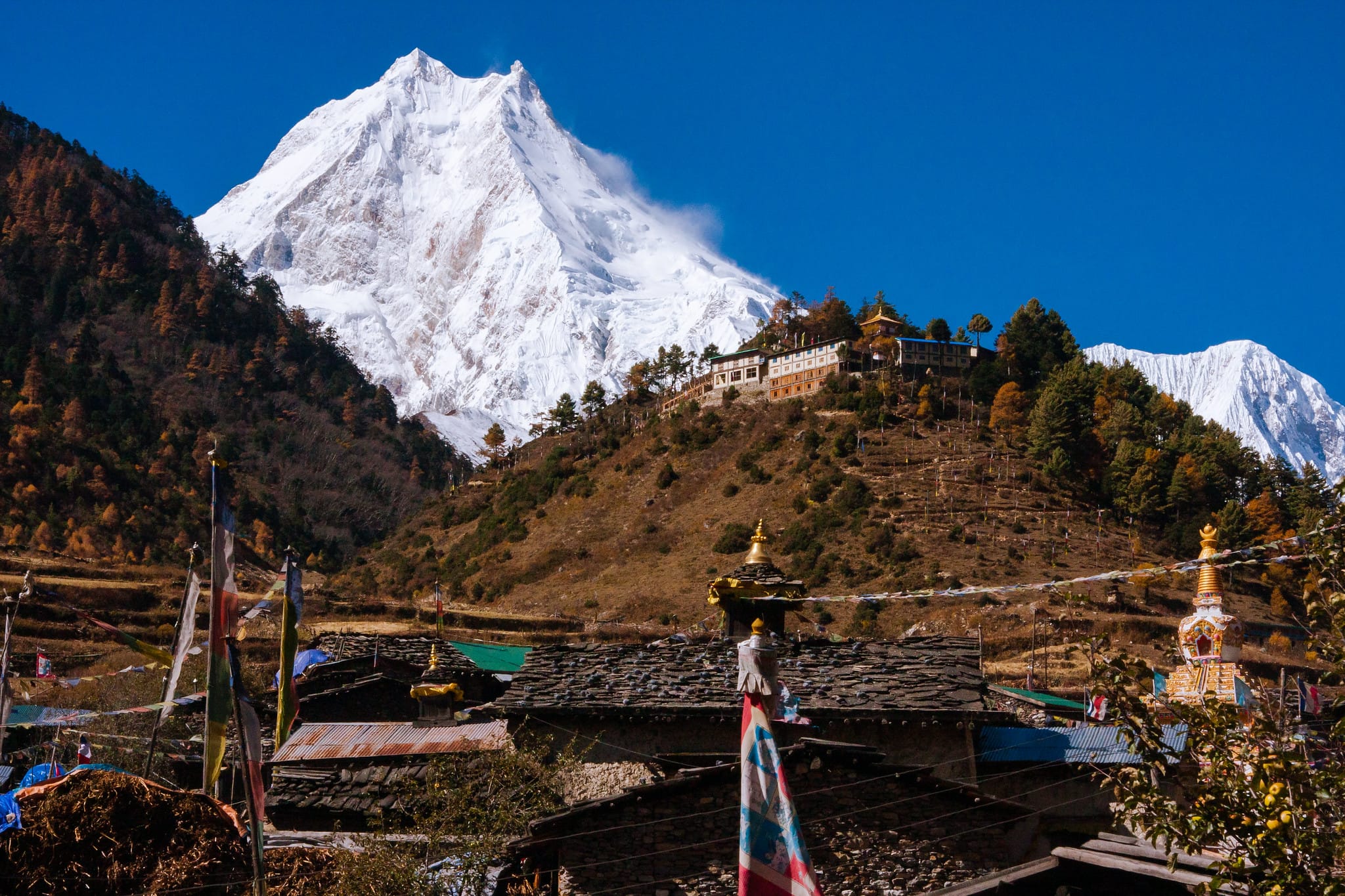
Manaslu Circuit Trek Permit 2026: Cost, Requirements, and Guide Rules
4th October, 2026 - Posted By: Himalayan AbodeThe Manaslu Circuit trek permit 2026 process requires advance planning. Manaslu is a restricted trekking area in Nepal, so you need several permits, a registered trekking agency, and a licensed guide.
You cannot arrange the main restricted-area permit by yourself. Your agency applies through the official immigration system before the trek begins. In 2026, solo travelers can apply without finding a second trekker, but they must still trek with a licensed guide.
This guide explains the Manaslu restricted area permit cost, required documents, guide rules, the Manaslu TIMS card requirement, and the correct way to apply.
Why Manaslu needs special permits
The Manaslu Circuit passes through a protected border region near Tibet. Nepal classifies much of the route as a restricted area.
The route also crosses the Manaslu Conservation Area and later enters the Annapurna Conservation Area near Dharapani. Because of this, trekkers need several documents before starting the trail.
A standard Manaslu Circuit requires:
- Manaslu Restricted Area Permit, often called MRAP or RAP.
- Manaslu Conservation Area Permit, called MCAP.
- Annapurna Conservation Area Permit, called ACAP.
- Chumnubri Rural Municipality fee, paid at Jagat in cash.
If you add Tsum Valley, you also need a separate Tsum Valley Restricted Area Permit.
Manaslu Circuit trek permit 2026 requirements
The Manaslu Circuit permit requirements 2026 include permits, agency support, guide details, and documents.
You need:
- A valid passport with at least six months of validity.
- A copy of your Nepal visa or your planned arrival date.
- Passport-size digital photo.
- Travel insurance covering high-altitude trekking and emergency helicopter evacuation.
- Your planned trekking dates.
- Route details.
- Licensed guide details.
- A registered Nepal trekking agency to submit the permit application.
Your agency will collect your documents, check the itinerary, and submit the RAP application through the Department of Immigration portal. Individual trekkers cannot use this restricted permit system directly.
Do not wait until you arrive at the trailhead. The major permits must be arranged in Kathmandu before you leave for Soti Khola or Machha Khola.
Manaslu restricted area permit cost
The Manaslu restricted area permit cost depends on the season and the days you spend inside the restricted section.
| Permit | September–November | December–August | Notes |
|---|---|---|---|
| Manaslu Restricted Area Permit | USD 100 for first 7 days, then USD 15 daily | USD 75 for first 7 days, then USD 10 daily | Agency and licensed guide required |
| MCAP | NPR 3,000 | NPR 3,000 | Manaslu Conservation Area |
| ACAP | NPR 3,000 | NPR 3,000 | Required near Dharapani exit |
| Chumnubri Municipality Fee | Around USD 8 | Around USD 8 | Usually paid in cash at Jagat |
The restricted permit cost is higher in the peak autumn season. A standard 14-day Manaslu itinerary often creates total permit costs of around USD 215–225 per person in autumn and about USD 163–170 during the off-season.
Permit fees can change. Ask your agency to confirm the latest price before you pay your final balance.
Manaslu TIMS card requirement
The Manaslu TIMS card requirement can confuse trekkers. The Manaslu Restricted Area Permit is the key legal document for the restricted section.
Many current Manaslu guides state that TIMS is generally not separately issued because the RAP and checkpoint system regulate the route.
However, some 2026 permit guides still advise trekkers to budget for a TIMS card. They list approximate charges of around USD 13 for most foreign nationals and lower fees for SAARC visitors.
The practical answer is simple: ask your agency whether TIMS applies to your exact route and current start date. Get every permit listed clearly in your contract.
Do not assume an old blog gives the final answer. Permit rules can change, and your itinerary may enter other regions where additional documents apply.
How to get Manaslu trekking permit
Many travelers ask, How to get Manaslu trekking permit documents correctly. Follow these steps.
Step 1: Choose a registered agency
Select a Nepal-registered trekking agency with experience in Manaslu. The agency must have access to the official restricted-area permit system.
Ask whether the price includes RAP, MCAP, ACAP, local fees, guide costs, insurance, transport, and taxes.
Step 2: Fix your route and dates
Confirm the route before applying. The permit system needs your start date, end date, guide details, and route plan.
A normal Manaslu Circuit often begins at Soti Khola or Machha Khola. It passes Jagat, Deng, Namrung, Lho, Samagaun, Samdo, Dharamsala, Larkya La, Bimthang, and Dharapani.
Adding Tsum Valley changes the schedule and requires another restricted permit.
Step 3: Send your documents
Send your agency:
- Passport scan.
- Digital passport photo.
- Nepal visa copy, if available.
- Travel insurance certificate.
- Emergency contact details.
- Arrival information.
- Preferred trekking dates.
Step 4: Agency submits permits
Your agency applies through the relevant government systems. The RAP goes through the Department of Immigration online portal.
The agency also arranges MCAP and ACAP. It may include the municipality fee in your package or tell you to pay it at Jagat.
Step 5: Receive permit copies and check details
Before departure, check:
- Your full name matches your passport.
- Dates match your real itinerary.
- Your guide details appear correctly.
- Every required permit is present.
- You understand checkpoint rules.
Keep photocopies and digital copies in your phone. Your guide normally carries the original permit documents.
Can you do Manaslu trek without guide?
The direct answer is no. A Manaslu trek without guide is not a legal option inside the restricted-area route.
The Manaslu RAP must be processed by a registered Nepal trekking agency. Your permit application must include a licensed guide.
A major 2026 update removed the old requirement for two foreign trekkers in the same group. This means one traveler can now apply through an agency. However, the guide requirement remains mandatory.
This rule improves safety on a remote route. Manaslu has landslide areas, river crossings, high altitude, limited medical services, and a high pass.
Your guide helps with:
- Permit checkpoints.
- Trail navigation.
- Weather updates.
- Lodge booking.
- Altitude monitoring.
- Emergency support.
- Communication with local communities.
A porter is not always legally required, but one can make the trek easier. Porters reduce your load and help you conserve energy at high altitude.
Himalayan Abode Manaslu itinerary
This 16-day route requires the Manaslu Restricted Area Permit, MCAP, ACAP, and any applicable local fees. A registered agency and licensed guide remain mandatory.
Day 1 – Arrival in Kathmandu (1,350 m)
You arrive in Kathmandu and transfer to your hotel. Your guide can arrange permits and discuss the trek.
Day 2 – Kathmandu to Soti Khola (710 m)
You drive from Kathmandu to Soti Khola. The journey takes about 7–8 hours through countryside, small towns, and river valleys.
Day 3 – Soti Khola to Machha Khola (900 m)
You trek for 6–7 hours past fields, subtropical forest, and villages beside the river. You stay overnight in Machha Khola.
Day 4 – Machha Khola to Jagat (1,410 m)
You walk 6–7 hours along the Budhi Gandaki River. You cross several suspension bridges and climb through small villages before reaching Jagat.
Day 5 – Jagat to Deng (1,804 m)
You trek for 6–7 hours through forest and river sections. You pass Salleri and Sirdibas before arriving at Deng.
Day 6 – Deng to Namrung (2,630 m)
You walk 6–7 hours through Ghap and Namrung. The landscape and culture become more Tibetan-influenced as you climb.
Day 7 – Namrung to Lho (3,180 m)
You trek for 4–5 hours through forest and fields. Lho offers strong views of Manaslu and a large monastery.
Day 8 – Lho to Samagaon (3,530 m)
You reach Samagaon after 4–5 hours. This large village is an important acclimatization stop.
Day 9 – Acclimatization day in Samagaon
You explore Samagaon and nearby areas. You can visit Pungyen Gompa or hike toward Manaslu Base Camp at 4,400 m.
Day 10 – Samagaon to Samdo (3,860 m)
You walk 3–4 hours on stony, scenic terrain. Samdo sits close to the Tibetan border.
Day 11 – Samdo to Dharamsala (4,460 m)
You trek for 3–4 hours through mountain marshland. Dharamsala, also called Larkya Phedi, is the base for the pass crossing.
Day 12 – Dharamsala to Bimthang via Larkya La Pass (5,106 m)
This is the hardest day. You start early, cross Larkya La Pass, and descend to Bimthang in 8–9 hours. The pass offers views of Himlung Himal, Cheo Himal, and Kang Guru.
Day 13 – Bimthang to Tilije (2,300 m)
You walk 5–6 hours through rhododendron forest, glacier areas, and small villages. You stay overnight in Tilije
Day 14 – Tilije to Dharapani (1,860 m), drive to Besisahar
You trek for 5–6 hours to Dharapani, where the Manaslu Circuit joins the Annapurna Circuit. You then drive 2–3 hours to Besisahar
Day 15 – Besisahar to Kathmandu
You drive back to Kathmandu for about 6–7 hours. You can rest, review your trek, and prepare for departure.
Day 16 – Departure from Kathmandu
You transfer to the airport for your flight home. You may use extra time for shopping or exploring Kathmandu.
Budget beyond permits
Your permit fees are only part of the total Manaslu budget. A full guided trek often costs around USD 1,550–2,100 in autumn, depending on days, group size, transport, service level, and inclusions.
Typical additional costs include:
- Licensed guide.
- Porter support.
- Transport to the trailhead.
- Teahouses and meals.
- Insurance.
- Hot showers and charging.
- Snacks and drinks.
- Tips.
- Extra weather or road-delay days.
- International airfare.
Keep extra cash for remote villages. Card payments and ATMs are not reliable after you leave Kathmandu.
Safety and permit checks
Keep all documents ready for checkpoints. Do not attempt to use another trekker’s permit or change your route without telling your agency.
Follow these safety rules:
- Trek with your registered guide.
- Follow the approved itinerary.
- Keep permit copies dry and accessible.
- Carry insurance details.
- Acclimatize at Samagaun.
- Do not rush toward Larkya La.
- Add buffer days for weather or road delays.
The highest part of the standard circuit is Larkya La Pass, around 5,106 m. Proper acclimatization and a careful pace are essential.
Frequently Asked Questions
1. What permits do I need for Manaslu Circuit trek permit 2026?
You need a Manaslu Restricted Area Permit, MCAP, ACAP, and a Chumnubri Rural Municipality fee. Add a Tsum Valley Restricted Area Permit if your itinerary includes Tsum Valley.
2. What is the Manaslu restricted area permit cost in 2026?
From September to November, it costs USD 100 for the first seven days and USD 15 for each extra day. From December to August, it costs USD 75 for the first seven days and USD 10 for each extra day.
3. How do I get Manaslu trekking permit documents?
Book through a registered Nepal trekking agency, send your passport scan, photo, insurance, dates, and guide details. The agency processes the permits before your trek.
4. Is a Manaslu TIMS card required in 2026?
The RAP is the core permit, and some agencies do not issue a separate TIMS card for Manaslu. Other guidance still lists TIMS, so confirm the latest rule and written inclusions with your agency.
5. Can I do Manaslu trek without guide?
No. A licensed guide and registered agency are mandatory for the restricted area. Solo travelers can apply alone in 2026, but they must still use a guide.
6. Can a solo traveler get Manaslu permits in 2026?
Yes. Since the 2026 update, you no longer need a second foreign trekker for the permit application. You still need a registered agency and licensed guide.
7. When should I apply for Manaslu permits?
Apply after fixing your route and dates, ideally at least several days before departure. Your agency must arrange permits in Kathmandu before the trek starts.
8. What happens if I add Tsum Valley?
You need an extra Tsum Valley Restricted Area Permit. Your itinerary, permit days, and total price will increase.
9. Where do permit checks happen on the Manaslu route?
Permit checks commonly begin around Jagat and continue at route checkpoints. Your guide carries the official documents and supports the process.
10. Why is Manaslu a restricted area?
Manaslu lies in a protected border region near Tibet. Nepal regulates entry to protect the area, manage trekking, and improve safety.
The Manaslu Circuit trek permit 2026 process may seem detailed, but a reliable agency handles most steps. Send accurate documents early, confirm all fees in writing, and trek with a licensed guide.
Recent Posts