Kangchenjunga Trek Difficulty & Itinerary 2026
7th September, 2026 - Posted By: Himalayan AbodeWant to walk beneath the world’s third-highest mountain? Few trekkers ever do. The Kangchenjunga Trek sits in Nepal’s far east, remote and rarely crowded. It’s one of the last true wilderness treks left in the Himalayas.
No queues at teahouses here. No traffic jams on the trail. Just glaciers, rhododendron forests, and villages that see a handful of foreigners each year. This guide covers everything for your 2026 trip. Difficulty, itinerary, permits, cost, and timing — all in one place.
Why Trek Kangchenjunga in 2026
Everest gets the fame. Annapurna gets the crowds. Kangchenjunga gets neither, and that’s exactly the appeal.
Trekker numbers here stay remarkably low year after year. Some days you’ll walk for hours without meeting anyone else. That silence changes how the whole trip feels.
A few reasons this trek stands out:
- True remoteness. Some days you won’t see another trekking group at all.
- Two base camps, one trip. North and South base camps offer contrasting views of the same massif.
- Rich biodiversity. The Kangchenjunga Conservation Area protects red pandas, snow leopards, and rare orchids.
- Untouched culture. Limbu and Rai communities live here, largely unchanged by tourism.
If solitude matters to you more than convenience, this route delivers it in full. Comfort takes a back seat. Authenticity takes the front.
Kangchenjunga Trek Difficulty
Let’s be honest: this trek is hard. It’s rated strenuous, one of the toughest teahouse treks in Nepal.
Don’t underestimate it based on photos alone. The terrain punishes complacency. Every day demands genuine physical effort.
Here’s why:
- Altitude. You’ll reach over 5,000m at both base camps, with Pangpema hitting roughly 5,140m.
- Duration. Most itineraries run 20–26 days. That’s a serious time commitment.
- Remote terrain. Trail conditions vary. Some sections are rugged, exposed, and physically demanding.
- Limited infrastructure. Teahouses exist, but they’re basic. Some stretches require camping instead.
This isn’t a trek for beginners. Prior high-altitude experience helps enormously. So does solid cardiovascular fitness built well before departure. Start training months ahead, not weeks. Your knees and lungs will thank you later.
Best Time to Trek Kangchenjunga
Timing shapes everything on this trek. Get it wrong, and weather can ruin your trip.
Autumn (September–November) is the top choice. Skies stay clear. Temperatures feel manageable. Visibility of Kangchenjunga and its neighboring peaks peaks during this window.
Spring (March–May) works well too. Rhododendrons bloom across the lower trail in vivid color. Days warm up nicely, though afternoon clouds roll in more often.
Winter (December–February) brings serious cold and heavy snow at altitude. Some passes may become impassable. Only experienced trekkers should attempt it.
Monsoon (June–August) should be avoided entirely. Rain, leeches, and landslide risk make this season genuinely dangerous here.
Kangchenjunga Trek Itinerary (24 Days)
This is the exact itinerary Himalayan Abode runs for the Kangchenjunga Trek. It starts and ends at Suketar, reached by a short flight from Kathmandu.
Day 1: Arrival in Kathmandu
Our airport team meets you on arrival. You’ll transfer straight to your hotel.
Day 2: Trek preparation in Kathmandu
Visit the trekking office for a briefing. Use the rest of the day to prepare gear.
Day 3: Fly to Suketar, trek to Lalikharka
A short flight brings you to Suketar. From there, walk through lush forest to Lalikharka.
Day 4: Lalikharka to Khesewa
Descend gently, then climb steadily through forest and small villages toward Khesewa.
Day 5: Khesewa to Mamankhe
Follow the trail toward Kabeli Khola. Himalayan peaks and small villages line the way.
Day 6: Mamankhe to Yamphudin
Walk uphill alongside Kabeli Khola. Pass a striking waterfall before reaching Yamphudin for the night.
Day 7: Yamphudin to Tortong
Cross terraced farmland and green meadows. A pass at Lassiya Bhanjyang leads you into Tortong.
Day 8: Tortong to Cheram
Climb through thick rhododendron forest. Views of the Yalung Glacier open up along the way.
Day 9: Acclimatization day in Cheram
Rest, or hike toward the Yalung Glacier viewpoint. Kabaru and Rathong peaks stand close by.
Day 10: Cheram to Ramche
Ascend past the snout of the Yalung Glacier. Pass the small settlement of Lapsang en route.
Day 11: Ramche to Yalung Base Camp, back to Cheram
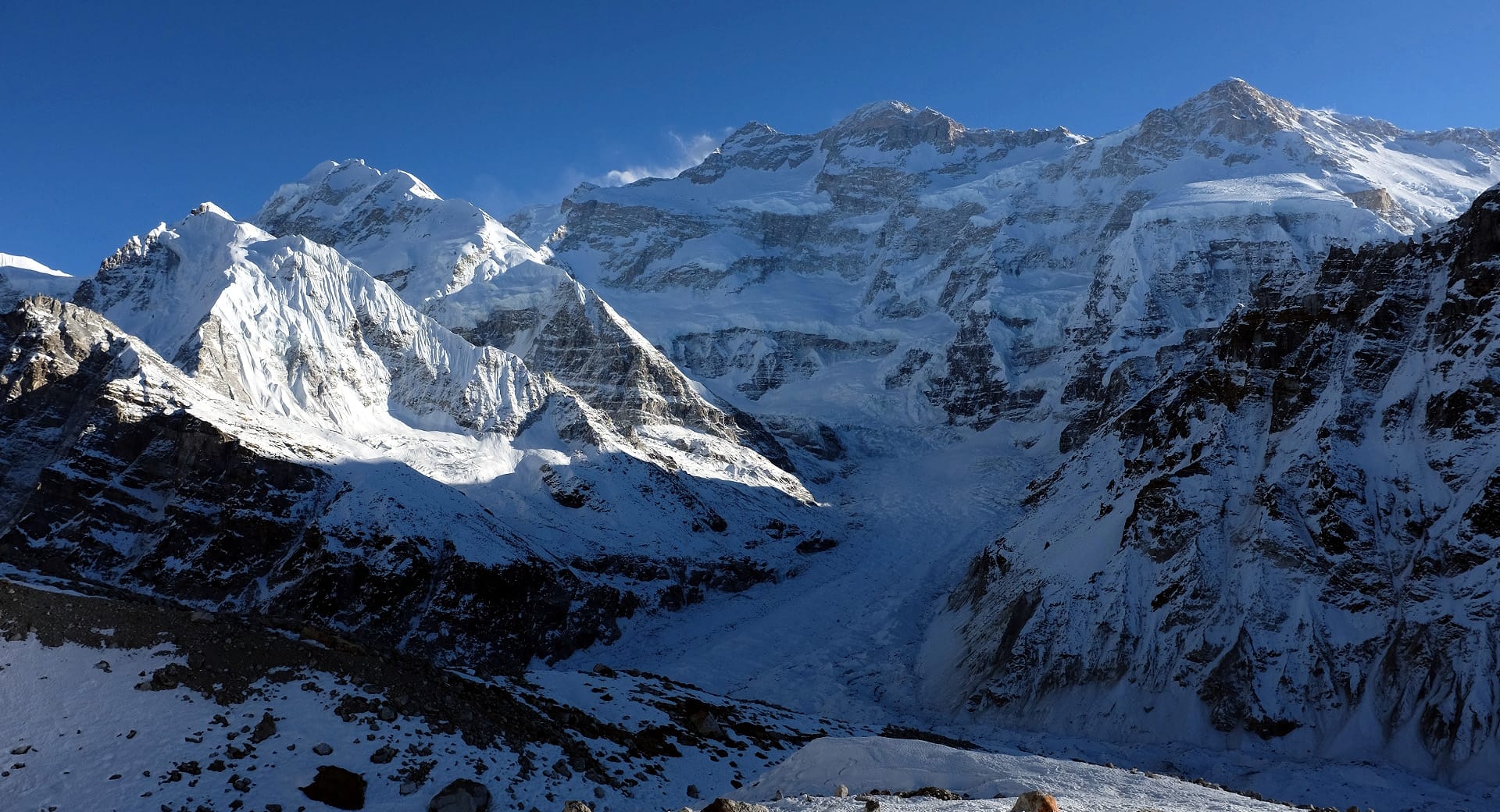
Reach Yalung Base Camp today. Kumbhakarna, Nyukla Lachung, and other giants surround you here.
Day 12: Cheram to Sele La
Cross four passes in a single day, ending at Sele La. Prayer flags mark the final stretch.
Day 13: Sele La to Ghunsa
Descend through rhododendron, birch, and pine forest. Ghunsa greets you with weathered pine houses.
Day 14: Ghunsa to Kambachen
Follow the river north through wildflower meadows. A tricky landslide section demands careful footing here.
Day 15: Kambachen to Lhonak
An early start helps on this demanding day. Cross rocky terrain and a landslide zone to Lhonak.
Day 16: Kanchenjunga Base Camp, overnight at Pangpema
Walk alongside the Kanchenjunga Glacier today. Kanchenjunga and Jannu Himal dominate the base camp view.
Day 17: Pangpema to Lhonak
Retrace your steps back to Lhonak, descending the same dramatic glacier route.
Day 18: Lhonak to Ghunsa
Continue the descent via Kambachen, following the same trail you climbed days earlier.
Day 19: Ghunsa to Amjilosa
Descend through Juniper forest via Phale and Gyabla, crossing two suspension bridges en route.
Day 20: Amjilosa to Chirwa
Pass through Solima and Sukathum. The trail runs alongside Thunsa Khola and Tamor Nadi.
Day 21: Chirwa to Phurumbu
Join the Pathibhara Trek trail here. Cross the Sisne Khola before reaching Phurumbu for the night.
Day 22: Phurumbu to Suketar
Your final trekking day. Take a well-earned rest once you reach Suketar.
Day 23: Fly to Kathmandu
Fly back to Kathmandu and settle into your hotel for the evening.
Day 24: Final departure
Transfer to the airport for your onward flight home.
This 24-day structure includes two full acclimatization buffers and covers both base camps. Explore the full Kangchenjunga Trek package here.
Kangchenjunga Trek Cost 2026
This trek costs more than shorter routes like Langtang or even Everest Base Camp. Why? Remoteness drives up logistics costs significantly.
Factor in these elements when budgeting:
- Restricted area permit fees, required for the entire route
- Extended trek duration, meaning more days of guide, porter, and food costs
- Limited teahouse infrastructure, sometimes requiring camping gear and additional crew
- Transport to Taplejung, whether by domestic flight or a long road journey
All-inclusive packages typically cover permits, guides, porters, meals, and accommodation throughout. Given the length and remoteness, this represents real value for a genuinely wild experience.
Permits Required for Kangchenjunga Trek
Three permits apply here, and none are optional.
- Kangchenjunga Restricted Area Permit — issued only through a licensed agency, priced per week
- Kangchenjunga Conservation Area Permit (KCAP)
- TIMS Card — standard trekker registration required across Nepal
Like Manaslu, this restricted status means solo trekking isn’t permitted. You must trek with a licensed guide from a registered agency.
What to Pack for Kangchenjunga Trek
Pack for genuine remoteness. Resupply options are limited once you’re deep into the trail.
- Down jacket rated for sub-zero temperatures at base camp
- Four-season sleeping bag, since some nights may involve camping
- Sturdy, waterproof hiking boots with strong ankle support
- Trekking poles for steep, uneven terrain throughout
- Water purification system, essential given limited resupply points
- Comprehensive first-aid kit, including altitude sickness medication
- Satellite communication device, given patchy mobile coverage in this region
How to Train for Kangchenjunga
Physical prep matters more here than on most Nepal treks. This isn’t something you cram in during the final month.
Start at least three months out. Build a base of regular cardio first. Hiking, running, and cycling all work well.
Add weighted pack training once your base fitness improves. Walk hills carrying 8–10kg for realistic conditioning. This mimics actual trail demands surprisingly closely.
Strength training helps too, especially for your legs and core. Squats, lunges, and step-ups build the stability you’ll need. Balance work matters on uneven, rocky terrain.
Don’t skip altitude awareness either. Read up on acute mountain sickness before you go. Know the symptoms, and know when to descend.
Accommodation and Food on the Trail
Teahouses exist along much of the route, though they’re simpler than those on Everest or Annapurna. Expect basic rooms and hearty, repetitive meals. Dal bhat, noodle soup, and tea remain trail staples throughout. Some stretches near both base camps require camping instead. Your agency will provide tents, cooking crew, and supplies for these sections.
Don’t expect variety in the food. Portions stay generous, though, and calories matter more than choice at this altitude. Hot drinks help with both warmth and hydration each evening.
Kangchenjunga vs. Everest Base Camp vs. Manaslu
How does Kangchenjunga stack up against Nepal’s other big treks?
Vs. Everest Base Camp: EBC is shorter, busier, and better equipped with teahouses. Kangchenjunga wins on solitude and raw wilderness, but demands far more time and stamina.
Vs. Manaslu: Both are restricted-area treks requiring guides. Manaslu runs 14–18 days; Kangchenjunga runs 20–26. Kangchenjunga sees noticeably fewer trekkers overall.
Choose Kangchenjunga if you want maximum remoteness and don’t mind the extended time commitment. Choose Everest or Manaslu if your schedule is tighter.
Frequently Asked Questions
Is the Kangchenjunga Trek suitable for beginners?
No. This trek suits experienced trekkers with prior high-altitude exposure and strong fitness levels.
How long does the Kangchenjunga Trek take?
Most itineraries run 20–26 days, including transport to and from Taplejung.
Can I visit just one base camp instead of both?
Yes. Many trekkers choose either North or South Base Camp to shorten the trip.
Do I need a guide for this trek?
Yes. The restricted-area status makes a licensed guide mandatory for all foreign trekkers.
Ready to Trek Kangchenjunga in 2026?
Few treks in Nepal offer this level of genuine wilderness. Kangchenjunga rewards patience, fitness, and a taste for solitude. It’s demanding, remote, and unforgettable in equal measure.
Contact our team today to book your Kangchenjunga Trek and get a personalized 2026 itinerary and quote.
Recent Posts