Best Time to Trek in Nepal: Month-by-Month Guide 2026/2027
20th September, 2026 - Posted By: Himalayan AbodeThe best time to trek in Nepal month by month depends on your route, altitude, weather preference, and crowd tolerance. Nepal has four main trekking seasons. Each season offers different trail conditions and mountain views.
For most major treks, autumn and spring provide the best conditions. October and November usually bring clear skies and stable weather. March, April, and May offer warmer days, blooming rhododendrons, and good visibility.
The monsoon months bring heavy rain across much of Nepal. However, rain-shadow regions like Upper Mustang and Upper Dolpo can still offer good trekking. Winter suits lower routes and trekkers who enjoy quiet trails.
This Nepal trekking seasons explained guide covers every month. It also answers when to visit Nepal for trekking and explains the best months for Everest Base Camp and Annapurna Base Camp.
Nepal trekking seasons explained
Nepal’s trekking year follows four broad seasons:
| Season | Months | Main conditions | Best for |
|---|---|---|---|
| Spring | March to May | Mild weather, clear mornings, flowers | Everest, Annapurna, Langtang |
| Monsoon | June to August | Rain, clouds, slippery trails | Upper Mustang, Upper Dolpo |
| Autumn | September to November | Clear skies, stable weather | Most major treks |
| Winter | December to February | Cold, dry, quiet trails | Lower routes and experienced trekkers |
Autumn is usually the most reliable season for high-altitude trekking. Spring follows closely and provides warmer temperatures and colorful forests.
The best season also depends on elevation. A low-altitude trek may work during winter, while a high pass can become dangerous under snow.
January: cold, clear, and quiet
January brings cold weather throughout the mountains. Higher passes may have snow, icy trails, and freezing nights. Some teahouses also close in remote areas.
Lower routes remain possible. Good options include:
- Ghorepani Poon Hill.
- Dhampus and Australian Camp.
- Nagarkot and nearby hill hikes.
- Lower Langtang routes.
- Kathmandu Valley day hikes.
The skies often remain clear during the day. You can enjoy peaceful trails and fewer crowds. However, higher treks require warm gear and flexible plans.
January works best for experienced trekkers who understand cold-weather risks. Beginners should choose lower trails with reliable accommodation.
February: improving days and quiet trails
February remains cold at high elevations, but daytime temperatures begin improving. Snow can still affect high passes and remote valleys.
Lower Annapurna routes offer good walking conditions. Poon Hill may provide excellent sunrise views after cold mornings. Mardi Himal can also work for prepared trekkers.
The best time to trek in Nepal month by month guide places February in the winter-to-spring transition. Crowds remain low, and prices may stay more affordable.
Choose February if you prefer quieter trails. Pack a warm sleeping bag and check snow conditions before starting.
March: spring begins
March marks the start of the main spring trekking season. Days become warmer, and many trails become easier to walk.
Rhododendrons begin blooming at lower and middle elevations. The Annapurna and Langtang regions look especially colorful.
March works well for:
- Everest Base Camp.
- Annapurna Base Camp.
- Langtang Valley.
- Poon Hill.
- Mardi Himal.
- Manaslu Circuit.
The best month for Everest Base Camp trek can include March, especially for trekkers who enjoy spring landscapes and moderate crowds. Snow may still appear at higher elevations.
Book flights, guides, and lodges early. Spring demand increases toward April.
April: one of the best trekking months
April often provides a strong balance of clear weather, comfortable temperatures, and spectacular scenery. Rhododendron forests usually reach peak bloom during this month.
The weather remains suitable for most major routes. Mountain views often stay clear during mornings, while afternoon clouds may appear.
April is an excellent month for:
- Everest Base Camp.
- Annapurna Base Camp.
- Annapurna Circuit.
- Langtang Valley.
- Manaslu Circuit.
- Upper Mustang.
Many trekkers consider April the best month for Everest Base Camp trek. Spring conditions support good visibility and colorful lower trails.
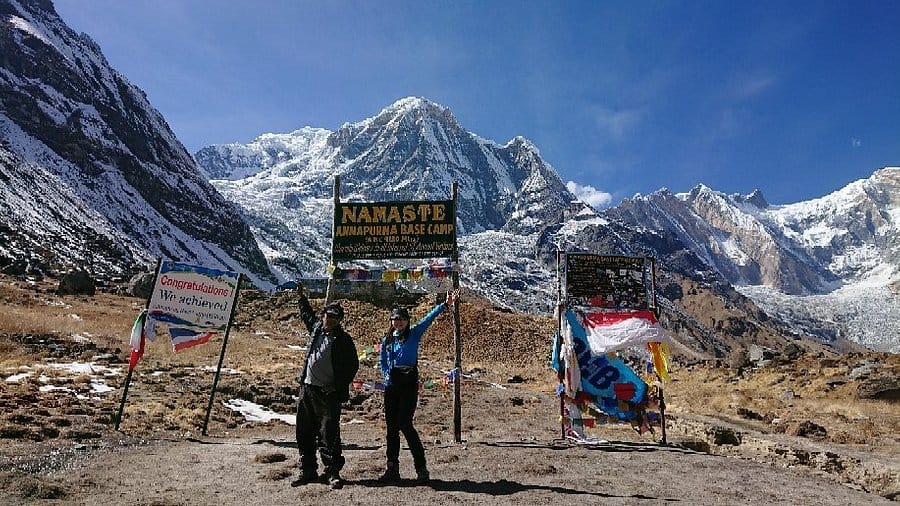
April is also a strong choice for the best month for Annapurna Base Camp trek. The weather feels pleasant, and blooming rhododendrons add color to the sanctuary.
Expect busy trails during school holidays and peak spring weeks. Reserve your package early.
May: warm and increasingly humid
May continues the spring trekking season, but the monsoon begins approaching. Lower valleys become warmer and more humid. Clouds may develop later in the day.
Early May usually offers better views than late May. High-altitude routes remain possible, but weather patterns may become less predictable.
Good options include:
- Everest Base Camp in early May.
- Annapurna Base Camp in early May.
- Upper Mustang.
- Dolpo.
- Nar Phu Valley.
May suits trekkers who want warmer conditions and fewer crowds than April. Carry rain protection because pre-monsoon showers can occur.
June: monsoon starts
June usually marks the beginning of the summer monsoon. Rain affects southern and eastern parts of Nepal. Trails can become muddy and slippery.
Clouds may block mountain views. Landslides can affect roads and transport routes. Leeches may appear in wet forest sections.
You can still consider rain-shadow destinations:
- Upper Mustang.
- Upper Dolpo.
- Nar Phu Valley.
- Mustang’s Jomsom region.
These areas receive less rainfall because surrounding mountains block much of the monsoon moisture. Always check transport and permit conditions before departure.
July: wettest month
July is often one of Nepal’s wettest months. Most popular trekking trails experience rain, mud, low visibility, and landslide risks.
The Annapurna and Everest regions remain possible for highly experienced trekkers. However, conditions may reduce mountain views and make travel uncomfortable.
Upper Mustang remains a better choice. Its dry landscape creates a sharp contrast with wet lower valleys.
July suits trekkers who prioritize solitude over clear views. Waterproof bags, rain covers, and quick-drying clothing become essential.
August: monsoon continues
August continues the wet season, although short clear periods may appear. Trails remain wet in most green mountain regions.
Upper Mustang and Upper Dolpo remain the strongest choices. Kathmandu and Pokhara also offer cultural activities between rain showers.
Avoid high passes during unstable weather. Snow, rain, and poor visibility can create serious risks. Ask your guide to check trail and road conditions daily.
August attracts fewer trekkers. Accommodation may feel quieter, but flight and road delays remain possible.
September: monsoon gradually ends
September becomes a transition month. Early September may still bring rain, while late September often brings improving conditions.
Trails begin drying. Mountain views usually improve as monsoon clouds clear. The second half of September can provide good trekking conditions.
Possible routes include:
- Annapurna Circuit.
- Manaslu Circuit.
- Langtang Valley.
- Everest Base Camp.
- Upper Mustang.
The when to visit Nepal for trekking answer often includes late September. However, flexible travelers should allow extra days for weather delays.
October: peak trekking month
October is widely considered the best overall month for trekking in Nepal. Clear skies, stable weather, and comfortable daytime temperatures attract trekkers from around the world.
October works well for nearly every major route:
- Everest Base Camp.
- Annapurna Base Camp.
- Annapurna Circuit.
- Langtang Valley.
- Manaslu Circuit.
- Mardi Himal.
- Rolwaling Valley.
The best month for Everest Base Camp trek is often October because visibility remains excellent. Flights to Lukla also usually benefit from more stable autumn weather, though delays can still happen.
October also ranks as the best month for Annapurna Base Camp trek. Clear skies reveal the mountain sanctuary, while temperatures remain comfortable.
October brings peak crowds. Book permits, flights, guides, and lodges well ahead.
November: clear skies and cooler nights
November continues the excellent autumn season. Skies often remain clear, and mountain views stay sharp.
Daytime temperatures feel comfortable at lower elevations. Nights become colder, especially above 3,500 meters.
November works well for:
Late November may bring early winter conditions at high passes. Carry warm layers and check current forecasts.
If you want clear views with slightly fewer crowds, November may suit you better than October.
December: cold and peaceful
December brings cold, dry weather and fewer trekkers. Lower routes remain comfortable during sunny days. High routes can become snowy and icy.
Good December choices include:
- Poon Hill.
- Mardi Himal.
- Dhampus.
- Australian Camp.
- Lower Langtang.
- Everest View Trek.
Experienced trekkers may attempt Everest Base Camp or Annapurna Circuit. They need proper winter equipment and flexible plans.
December suits travelers seeking quiet trails. However, verify lodge availability before starting remote routes.
Sample itinerary for seasonal planning
The following framework shows how agencies commonly structure a guided Nepal trek. It is a general planning example, not a specific package itinerary.
Day 1: Arrive in Kathmandu
Meet your agency representative and rest after your flight.
Day 2: Prepare and explore Kathmandu
Visit cultural sites, check your equipment, and attend a trek briefing.
Day 3: Travel to the trailhead
Drive or fly to your starting point. Keep important documents and medicine in your daypack.
Days 4–6: Trek through lower villages
Walk through forests, farms, and traditional settlements. Adjust your pace gradually.
Day 7: Acclimatization day
Rest or take a short hike. Avoid rushing to higher elevations.
Days 8–10: High-altitude section
Start early and carry warm layers, water, snacks, and rain protection.
Days 11–12: Descend and return
Walk down carefully and allow extra time for transport delays.
Day 13: Departure
Return to the airport or continue with your Nepal travel plans.
Your actual itinerary depends on the trek, season, altitude, and available transport.
How to choose best time to trek in Nepal month by month
Choose your best time to trek in Nepal month by month based on your main priority :
- Choose October or November for the clearest mountain views.
- Choose March or April for rhododendrons and warmer trails.
- Choose December or February for quiet lower-altitude routes.
- Choose July or August for Upper Mustang and Upper Dolpo.
- Choose late September for improving weather and fewer crowds.
- Avoid high passes during unstable winter or monsoon conditions.
Always check current weather reports before departure. Seasonal patterns help planning, but mountain weather can change quickly.
Frequently Asked Questions
1. What is the best time to trek in Nepal month by month?
October and November usually offer the most reliable conditions. March, April, and May also work well, especially for spring flowers and warmer temperatures.
2. What is the best month for Everest Base Camp trek?
October is often the best month for Everest Base Camp because it brings stable weather and clear mountain views. April is another excellent choice.
3. What is the best month for Annapurna Base Camp trek?
October is often the best month for Annapurna Base Camp. November, March, and April also provide good conditions.
4. When should I visit Nepal for trekking?
Visit during spring from March to May or autumn from late September to November. These seasons suit most popular trekking routes.
5. Can I trek in Nepal during the monsoon?
Yes. Choose rain-shadow regions like Upper Mustang or Upper Dolpo. Most other routes become wet, slippery, and cloudy.
6. Is winter safe for trekking in Nepal?
Winter can be safe on lower routes. High passes and remote trails may require winter experience, proper gear, and flexible plans.
7. Which month has the fewest trekkers?
January, February, July, and August usually have fewer trekkers. Weather conditions also become more challenging during these months.
8. When do rhododendrons bloom in Nepal?
Rhododendrons usually bloom from March to May. April often offers the strongest displays in middle-altitude forests.
9. Should I book early for peak season?
Yes. Book guides, permits, flights, and accommodation early for October, November, April, and popular spring weeks.
10. Can weather delay flights during trekking season?
Yes. Flights can face delays during rain, wind, fog, or poor visibility. Add one or two buffer days to your itinerary.
Choosing the best time to trek in Nepal month by month helps you match the route with the weather. For most travelers, October, November, April, and March offer the best balance. Proper planning, flexible days, and suitable gear will make your 2026/2027 trek safer and more enjoyable.