Kathmandu’s Buddhist World Heritage: Sacred Stupas, Monasteries & Spiritual Legacy
28th December, 2025 - Posted By: Himalayan AbodeKathmandu’s Buddhist World Heritage sites form the spiritual heartbeat of Nepal, blending ancient stupas, monasteries, and living Vajrayana traditions within the UNESCO-listed Kathmandu Valley. Dominated by iconic landmarks like Swayambhunath and Bouddhanath stupas, these Buddhist World Heritage sites in Kathmandu attract pilgrims, scholars, and travelers seeking enlightenment amid Himalayan panoramas. This guide explores their history, rituals, visiting tips, and cultural significance to help you experience Kathmandu Buddhist heritage authentically.
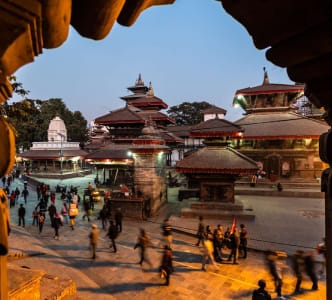
Designated UNESCO World Heritage in 1979 as part of the Kathmandu Valley ensemble, these sites represent Buddhism’s evolution from Theravada roots to Tibetan-influenced Vajrayana practices. Swayambhunath (1500+ years old) and Bouddhanath (5th century) stand as twin jewels, surrounded by Newar Buddhist temples and active monasteries.
Historical Significance of Kathmandu’s Buddhist World Heritage
Kathmandu Valley’s Buddhist heritage traces to the 3rd century BCE when Emperor Ashoka erected stupas. Licchavi kings (400-750 CE) built Swayambhunath, while Tibetan trade routes elevated Bouddhanath as a mandala replica of Tibet’s Gyantse. Earthquakes (1934, 2015) tested resilience, yet reconstruction preserves authenticity.
These sites symbolize impermanence—stupas rebuilt symbolize samsara’s cycle. Newar Buddhism’s unique tantric practices thrive here, blending Hindu-Buddhist syncretism unique to the valley.
Swayambhunath Stupa: The Self-Arisen Jewel of Kathmandu
Perched on Swayambhu Hill 3km west of Thamel, Swayambhunath Stupa—”Monkey Temple”—is Kathmandu’s oldest Buddhist World Heritage site (250 BCE origins). Legend says it self-emerged from a primordial lotus lake drained by Manjushri Bodhisattva.
Architectural Marvels
- 55m Golden Spire: 20kg gold plating, Buddha’s all-seeing eyes survey four directions.
- 365 Steps: Merit-building ascent flanked by Vajrayana shrines.
- Vajra Platform: Thunderbolt symbolizing indestructible dharma.
- Harati Devi Temple: Goddess protecting children, syncretic Hindu-Buddhist worship.
Pilgrimage Rituals: Clockwise kora (circumambulation), prayer flags, butter lamps at dusk. Monkeys add playful energy—feed wisely!
Views: 360° Kathmandu Valley, Langtang Himal backdrop. Sunset golden hour magical.
Visiting Tips: NPR 200 entry. Early morning (6AM) avoids crowds. Respect no-photo zones during pujas.
Bouddhanath Stupa: Nepal’s Largest Mandala Monument
8km east of Kathmandu center, Bouddhanath Stupa towers 36m as the world’s largest spherical stupa and key Kathmandu Buddhist World Heritage gem. Built 5th century CE on ancient Tibet trade route, renovated 8th century mimicking Gyantse mandala.
Sacred Elements
- Massive Dome: Whitewashed base, gilded pyramid tower.
- Buddha Eyes: 13m diameter, symbolizing wisdom.
- 108 Niches: Buddha images for kora path.
- Tibetan Enclave: Thangka galleries, monk debates, refugee culture.
Spiritual Atmosphere: Vibrant evenings—pilgrims spin 50+ prayer wheels, chant “Om Mani Padme Hum.” Sky burials nearby add contemplative depth.
Night Experience: Illuminated stupa, resonant bells, meditative peace.
Entry: NPR 400 (foreigners). Sunset kora essential.
Integration Within Kathmandu Valley UNESCO Sites
Kathmandu’s Buddhist World Heritage complements the valley’s seven sites:
- Three Durbar Squares (Kathmandu, Patan, Bhaktapur): Royal plazas with embedded viharas.
- Pashupatinath: Hindu-Buddhist cremation ghats.
- Changu Narayan: Vishnu temple with Buddhist inscriptions (5th century).
Swayambhunath and Bouddhanath represent the “religious ensembles” category, showcasing Newar craftsmanship—tiered roofs, toranas, gilt icons.
Syncretism: Hindu deities (Ganesh, Kumari) coexist peacefully, reflecting Nepal’s religious harmony.
Hiranya Varna Mahavihar: Patan’s Golden Buddhist Monastery
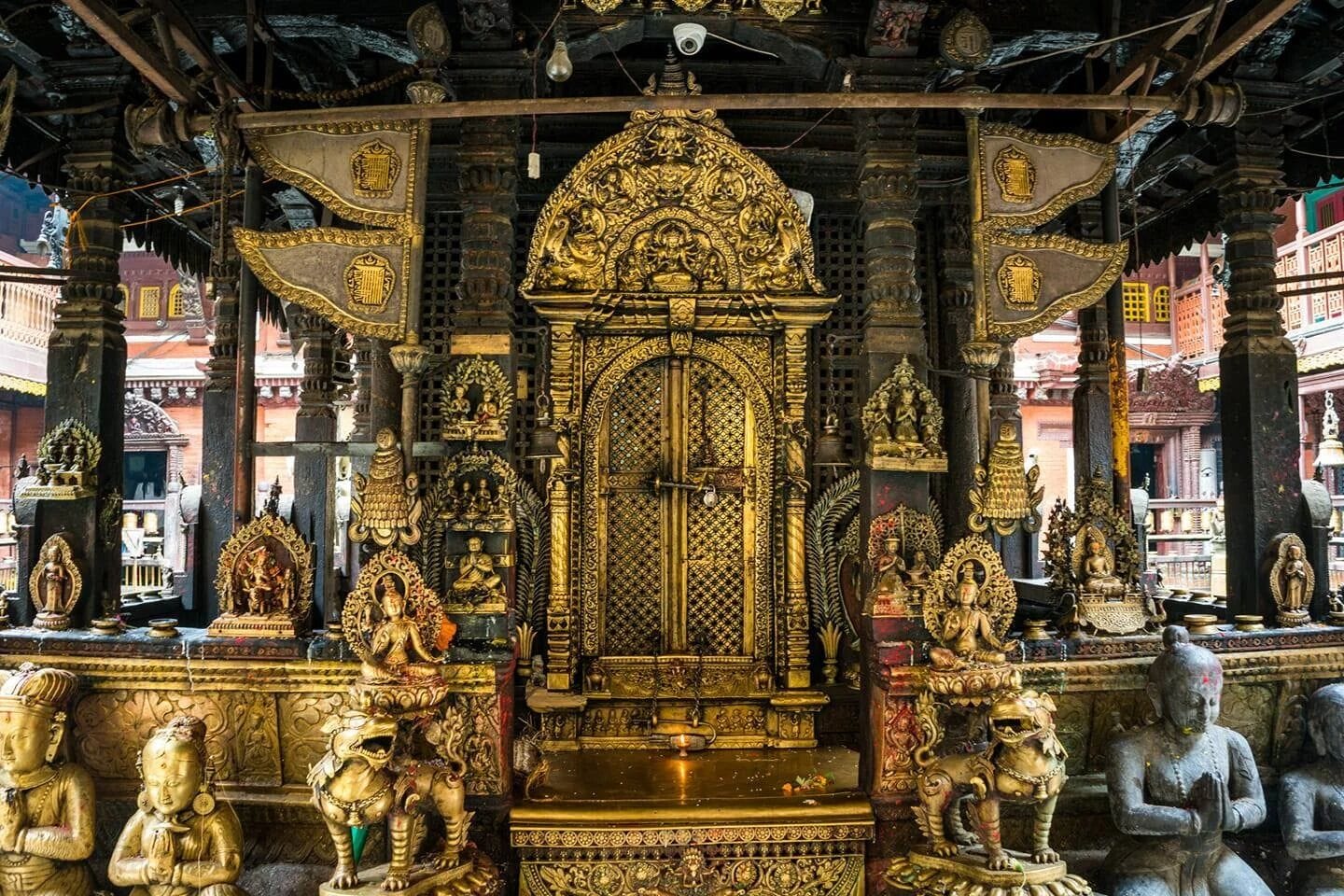
Patan’s Kwabahal neighborhood hides Hiranya Varna Mahavihar (12th century), guild-built golden temple with 1,251 gilt Buddha images. Active vihara for Newar priests.
Highlights:
- Three-Story Pagoda: Intricate woodcarvings, erotic struts.
- Uchitya Worship: Tantric rituals, secret mandalas.
- Kwapa Dyah: Ratna Vajra deity shrine.
Pilgrimage: Merit offerings, manuscript library access (permission needed).
Kopan Monastery: Modern Tibetan Buddhist Learning Center
North Kathmandu’s Kopan Monastery (1969) hosts 400+ monks, offering 10-day Vipassana retreats. Founded by Zopa Rinpoche, it popularized Tibetan Buddhism globally.
Experiences:
- Ngakpa Courses: Tantric preliminaries.
- Debate Sessions: Monks’ philosophical sparring.
- Peace Garden: Stupa circumambulation.
Stay: Dorm NPR 500/night, vegetarian meals.
Rato Monastery (Rato Dratsang): Gelugpa Scholar Hub
Pulchowk’s Rato Monastery preserves Gelugpa lineage post-1959 Tibet exodus. Houses rare texts, debate yards.
Unique: Annual Long Life Puja blessings.
Festivals Enhancing Kathmandu’s Buddhist World Heritage
Attend Losar at Bouddhanath: Fire pujas, masked lamas, communal feasts.
Visiting Tips for Kathmandu’s Buddhist World Heritage
Practical Advice
- Best Season: Oct-Nov (clear skies), Mar-May (flowers).
- Dress: Long sleeves/pants, headscarf for women.
- Rituals: Clockwise kora, right shoulder to stupa.
- Offerings: Butter lamps (NPR 50), rice, khata scarves.
- Photography: Ask permission during pujas.
- Transport: Taxis NPR 500/site, walking tours available.
Guided vs Solo
Solo: Flexible, cheaper (NPR 1,500/day).
Guided: Context, monastery access (NPR 3,000/day).
Sustainable Tourism: NPR 100 donations, no littering.
Cultural Significance & Living Heritage
Newar Buddhism thrives uniquely—vajracharyas as householder priests perform secret initiations. Stupas serve as reliquaries containing Buddha relics (sarira). Active conservation post-2015 quake preserves authenticity.
Beyond the Core: Emerging Buddhist Heritage Sites
- Pharping Asura Cave: Milarepa’s meditation site.
- Bajrayogini: Dakini tantric temple, Sankhu.
- Namo Buddha: Buddha’s sacrifice site (1hr drive).
FAQs: Kathmandu’s Buddhist World Heritage
Q: What are the main Buddhist World Heritage sites in Kathmandu?
A: Swayambhunath and Bouddhanath stupas, part of Kathmandu Valley UNESCO listing.
Q: How old is Swayambhunath Stupa?
A: Over 1500 years, possibly 2500 BCE origins.
Q: Is Bouddhanath the largest stupa in Nepal?
A: Yes, 36m high, world’s largest spherical mandala stupa.
Q: Best time to visit for festivals?
A: Losar (Feb-Mar) at Bouddhanath, Buddha Jayanti (May).
Q: Entry fees for foreigners?
A: Swayambhunath NPR 200, Bouddhanath NPR 400.
Q: Can Hindus visit these Buddhist sites?
A: Yes, syncretic worship common—Ganesh shrines coexist.
Q: Safe for solo female travelers?
A: Very safe; join group koras, monastery guesthouses available.
Conclusion: Spiritual Journey Through Kathmandu’s Buddhist World Heritage
Kathmandu’s Buddhist World Heritage—Swayambhunath’s ancient gaze, Bauddhanath’s resonant kora—offers timeless serenity amid urban chaos. These living mandalas preserve Vajrayana essence, inviting circumambulation, meditation, and cultural immersion.
Visit respectfully: spin wheels, light lamps, chant mantras. Nepal’s sacred stupas await your pilgrimage footsteps.
Recent Posts