Everest Base Camp Trek 2026: What You Need to Know Before You Go
26th April, 2026 - Posted By: Himalayan AbodeThe Everest Base Camp trek 2026 is one of the most popular high‑altitude hikes in the world. Each year, thousands of trekkers walk this route in Nepal. In 2026, it is still a top choice for beginners, couples, and solo travelers. This post will help you understand the route, fitness needs, and real‑world tips before you book.
The Everest Base Camp trek 2026 is not a technical climb. You do not need ropes, ice axes, or past mountaineering skills. You only need good basic fitness, warm clothes, and a trusted trekking agency in Nepal. Himalayan Abode runs this route every season and follows the 16‑day detailed itinerary on your product page.
How long is the Everest Base Camp trek 2026?
According to your official tour page, the Everest Base Camp trek 2026 lasts 16 days of total travel. This includes:
- Kathmandu city days
- Lukla flight and trekking days
- Return and farewell day
Most of the trekking days are moderate in length. You walk 4–7 hours per day, depending on the route and your fitness level. The full route follows a classic Khumbu Valley loop with proper rest days at Namche and Dingboche to reduce altitude risk.
Detailed Everest Base Camp trek 2026 itinerary (16‑day)
Day 1 – Arrival in Kathmandu (1,350 m)
You arrive at Kathmandu airport and transfer to your hotel. After a short rest, you can explore the area near your hotel. You stay overnight in Kathmandu.
Day 2 – Kathmandu sightseeing (UNESCO heritage sites)
You visit major cultural sites such as Pashupatinath, Boudhanath, and Bhaktapur. After sightseeing, you return to your hotel and rest for the next day’s flight to Lukla.
Day 3 – Kathmandu to Phakding via Lukla (2,640 m)
You fly from Kathmandu to Lukla (about 30 minutes). After landing, you start your trek to Phakding. The walk is about 4 hours and passes through forests and small Sherpa villages.
Day 4 – Phakding to Namche Bazaar (3,435 m)
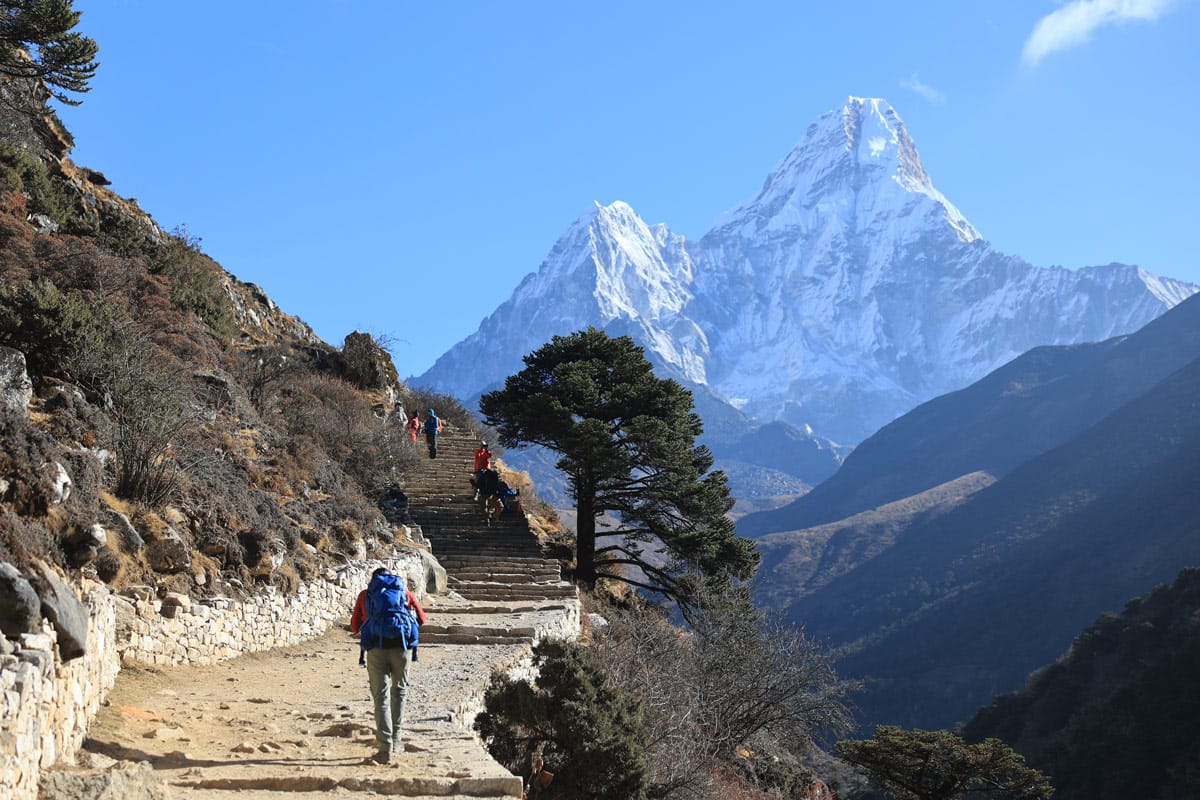
The trail follows the Dudh Kosi River. You cross several suspension bridges and see Thamserku, Ama Dablam, and distant Everest views. The trek takes about 7 hours and ends in Namche Bazaar, the main trading town of the Khumbu region.
Day 5 – Acclimatization in Namche Bazaar
You spend the day in Namche Bazaar to adjust to the altitude. You can hike to Khumjung–Khunde or visit the Sherpa Museum. Light walking helps your body adapt and reduces the risk of altitude sickness.
Day 6 – Namche Bazaar to Tengboche (3,863 m)
The trail descends to the Dudh Kosi River and later climbs through rhododendron forests. You see clear views of Everest, Lhotse, Ama Dablam, and Khangtega. You arrive at Tengboche, home of the famous Tengboche Monastery.
Day 7 – Tengboche to Dingboche (4,412 m)
You walk from Tengboche down through forests and cross the Imja Khola. The route passes Lower Pangboche and offers great views of Ama Dablam. You reach Dingboche, a quiet village at higher altitude.
Day 8 – Rest day in Dingboche (acclimatization)
You spend a full day in Dingboche for acclimatization. You can hike to Pokalde Peak (around 5,000 m) and return to the village. Two nights at Dingboche help your body adjust before the high‑altitude sections.
Day 9 – Dingboche to Lobuche (4,931 m)
The trail climbs from Pheriche to a ridge and then heads to Lobuche. You see views of Tawoche and Cholatse. The air feels thinner and the landscape becomes more rocky and alpine.
Day 10 – Lobuche to Gorakshep (5,140 m) and Everest Base Camp (5,364 m)
You walk from Lobuche to Gorakshep in about 4 hours. After lunch, you hike to Everest Base Camp. The path lies near the Khumbu Glacier and offers a close view of the Everest climbing route.
Day 11 – Gorakshep to Kalapathar and Pheriche (4,240 m)
Early in the morning, you climb Kalapathar (5,545 m) for sunrise and full views of Everest, Lhotse, and neighboring peaks. After the descent, you walk back to Gorakshep, then continue to Pheriche.
Day 12 – Pheriche to Tengboche (3,860 m)
The trail descends to Pangboche with views of Ama Dablam and Lhotse. You cross the Imja Khola and enter pine forests. You reach Tengboche and can visit the monastery if you have time.
Day 13 – Tengboche to Namche Bazaar (3,435 m)
You descend from Tengboche through Phungi Thanga and cross long suspension bridges. The path is easier and you walk about 6 hours to reach Namche Bazaar again.
Day 14 – Namche to Lukla (2,850 m)
You walk down to the Dudh Kosi River and cross several bridges. Following the same route back to Lukla, which takes about 7 hours. You spend the night in Lukla before your flight.
Day 15 – Lukla to Kathmandu
After breakfast, you fly back to Kathmandu with views of Everest, Kongde Himal, and the Khumbu and Langtang ranges. You transfer to your hotel and rest.
Day 16 – Free day in Kathmandu
You have a free day to relax, shop, or explore leftover city sights. This is also a good day to catch up on rest and mild city walks.
Day 17 – Final airport transfer
You check out from your hotel and transfer to the airport for your final departure.
This 16‑day Everest Base Camp trek 2026 includes 2 full acclimatization days (Namche and Dingboche) and key viewpoints like Kalapathar and EBC. It matches the exact structure written on your product page and supports your brand messaging.
Fitness, weather, and safety for Everest Base Camp trek 2026
To complete this Everest Base Camp trek 2026 safely, you should:
- Train for 4–6 weeks before your trip
- Walk 10–15 km with a light backpack
- Learn basic altitude rules (walk slowly, drink water, rest)
The best seasons for this trek are spring (March–May) and autumn (September–November). These months give you clear skies and stable weather. Avoid monsoon (June–August) and deep winter (December–January) unless you are very experienced.
Altitude sickness is the main risk. Walk slowly, drink 3–4 liters of water per day, and respect the acclimatization days. Tell your guide if you feel dizzy, nauseated, or short of breath.
Permits and costs for Everest Base Camp trek 2026
For this 16‑day Everest Base Camp trek 2026, Himalayan Abode includes:
- Airport and hotel transfers in Kathmandu
- Hotel with breakfast in Kathmandu
- Kathmandu–Lukla round‑trip flights
- All permits (Sagarmatha National Park and TIMS)
- English‑speaking guide and local porter (2 trekkers : 1 porter)
- Guide and porter salaries, insurance, food, and accommodation
- Breakfast, lunch, and dinner with tea or coffee on trek
- Teahouse accommodation on trail
You pay extra for:
- Kathmandu city tour guides and entrance fees
- Lunch and dinner in Kathmandu
- Mineral water, hot shower, Wi‑Fi, personal items, and tips
This clear Everest Base Camp trek 2026 package avoids hidden fees and matches the “includes / excludes” section on your product page.
Frequently Asked Questions
1. What is the Everest Base Camp trek itinerary?
The Everest Base Camp trek 2026 is a 16‑day program that starts in Kathmandu, flies to Lukla, treks through Namche, Tengboche, Dingboche, Lobuche, and Gorakshep, then reaches Everest Base Camp and Kalapathar before returning via Pheriche, Tengboche, Namche, and Lukla to Kathmandu.
2. How high does the Everest Base Camp trek 2026 go?
The trek reaches 5,364 m at Everest Base Camp and 5,545 m at Kalapathar, the highest point on the route.
3. Do I need a permit for Everest Base Camp trek 2026?
Yes. You need a Sagarmatha National Park permit and a TIMS card. Himalayan Abode includes both in the package.
4. Is Everest Base Camp trek hard for beginners?
It is moderate for healthy beginners who train in advance. The 16‑day plan with acclimatization days in Namche and Dingboche makes it safer.
5. How much does it cost?
Cost depends on group size, season, and extra services. Your official page shows a 16‑day standard package with clear inclusions and exclusions.
6. What is the best time for Everest Base Camp trek 2026?
The best time is spring (March–May) and autumn (September–November). These seasons have clear skies and safe trail conditions.
7. What should I pack for Everest Base Camp trek?
Pack warm layers, a waterproof jacket, good hiking boots, a warm sleeping bag, a headlamp, trekking poles, and a light daypack. You can rent or buy extra gear in Kathmandu.
8. Can I walk Everest Base Camp trek 2026 alone?
Yes, but using a trekking agency in Nepal for Everest Base Camp trek 2026 is safer. A guide helps with permits, directions, and altitude management.
9. How do I avoid altitude sickness?
Walk slowly, drink plenty of water, eat light meals, and use rest days in Namche and Dingboche. Do not rush to higher altitudes.
10. How do I book this Everest Base Camp trek with Himalayan Abode?
Send your travel dates, group size, and any preferences to Himalayan Abode. You receive a clear Everest Base Camp trek 2026 itinerary and price. After paying a deposit, we confirm flights, hotels, and permits.
Recent Posts